GPU WORLD · GW-LC-CDU-18A
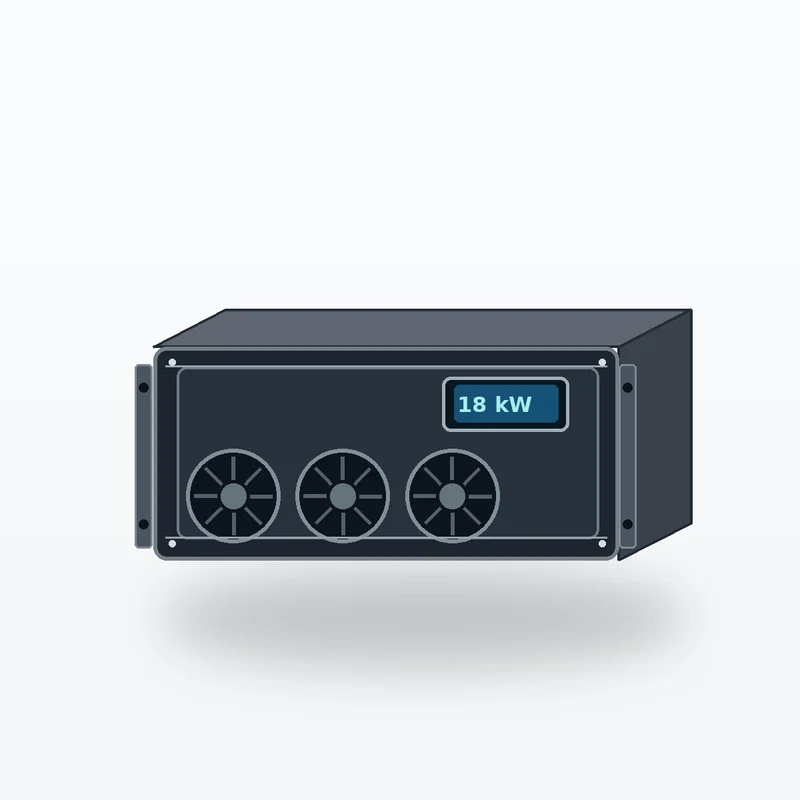
18 kW planning class liquid-to-air CDU
Room cooling reviewAssess an air-rejecting CDU for a higher-load lab or multi-server loop. Room airflow, acoustics and pump performance guide selection.
Fit and compatibility
- Provide a list of nodes, the simultaneous liquid load and the minimum flow each node needs. Identify whether nodes will be isolated while the other equipment runs.
- Check radiator airflow and hot air recirculation, peak room temperature, acoustics and available electrical service. Allow room for filter and fan maintenance.
Scope of supply
- Define the proposed CDU, distribution headers and server interfaces. Confirm the quoted pump and fan configuration, alarms, service access and any spare assemblies.
- Request the supplier capacity map and pump curves for the intended coolant, plus airflow and sound data at the operating point.
Operating conditions
- Treat 18 kW as a planning class and evaluate the actual capacity at design coolant flow and radiator entering-air temperature. Model the room air path at sustained load.
- Check the pump range as nodes enter and leave service. Compare the minimum and maximum branch flows with each server’s cooling limits.
- Include CDU exhaust, residual server heat and CDU electrical losses in the room HVAC load. Confirm whether failure of a pump, fan or room cooling unit changes the permitted IT load.
Acceptance checks
- Step through the agreed server loads and verify coolant temperatures, branch flow and room air conditions at sustained duty.
- Verify node isolation and the specified pump or fan alarm response. Check that maintenance access and acoustic limits match the approved configuration.
Technical references
Use these references to identify the platform and design requirements. GPU WORLD confirms the applicable assembly and operating conditions for each project.
CONFIGURATION & QUOTATIONSRequest a cooling quoteShare your server configuration and site conditions.Request a quote
Plan your cooling project
Our team will review server fit, heat rejection and the scope of supply.